Top 5 Basic Commands Every Dog Should Know
Training a dog is an essential part of responsible pet ownership. Teaching basic commands not only helps manage a dog’s behavior but also strengthens the bond between the dog and its owner. For many pet parents, the process of training can seem daunting, but with the right approach and consistent practice, it can be a rewarding experience. This article explores five fundamental commands that form the foundation of a well-behaved dog: sit, stay, come, down, and leave it. We will discuss simple training techniques rooted in positive reinforcement, a method that focuses on rewarding desired behaviors to encourage their repetition.
Understanding how dogs learn is key to effective training. Dogs are highly motivated by rewards such as treats, praise, and play. Positive reinforcement leverages this natural inclination by associating a command with a pleasant outcome. When a dog performs the desired behavior and receives a reward, it is more likely to repeat that behavior in the future. However, successful training requires patience, consistency, and clear communication. This article aims to provide practical guidance for teaching these commands, emphasizing a process that is both ethical and effective.
Before diving into the specifics, it’s important to note that every dog is unique. Factors such as age, breed, and temperament can influence the pace of learning. Training sessions should be kept short and frequent, ideally five to ten minutes a few times a day, to maintain the dog’s attention and prevent frustration. Additionally, it is advisable to train in a quiet environment with minimal distractions, gradually increasing difficulty as the dog becomes more proficient. With these principles in mind, let’s explore each command in detail.
The Importance of Basic Commands
Basic commands are more than just tricks; they are communication tools that enhance safety and cooperation. A dog that reliably responds to commands is easier to manage in various situations, such as during walks, visits to the vet, or interactions with other animals. For instance, a solid recall (come) can prevent a dog from running into traffic or approaching a dangerous object. Similarly, a reliable stay can keep a dog calm and safe while the owner opens a door or handles a potentially hazardous situation.
Moreover, training provides mental stimulation for dogs, which is vital for their overall well-being. A mentally engaged dog is less likely to develop behavioral problems related to boredom or anxiety. Training sessions also present opportunities for positive social interaction, reinforcing the dog’s trust in its owner. Furthermore, mastering basic commands can be a stepping stone for advanced training, such as agility or therapy work, where precise obedience is required. Therefore, investing time in teaching these commands yields benefits that extend far beyond simple obedience.
Consistency is the cornerstone of successful dog training. Using the same verbal cues and hand signals each time helps the dog understand what is expected.
1. Sit
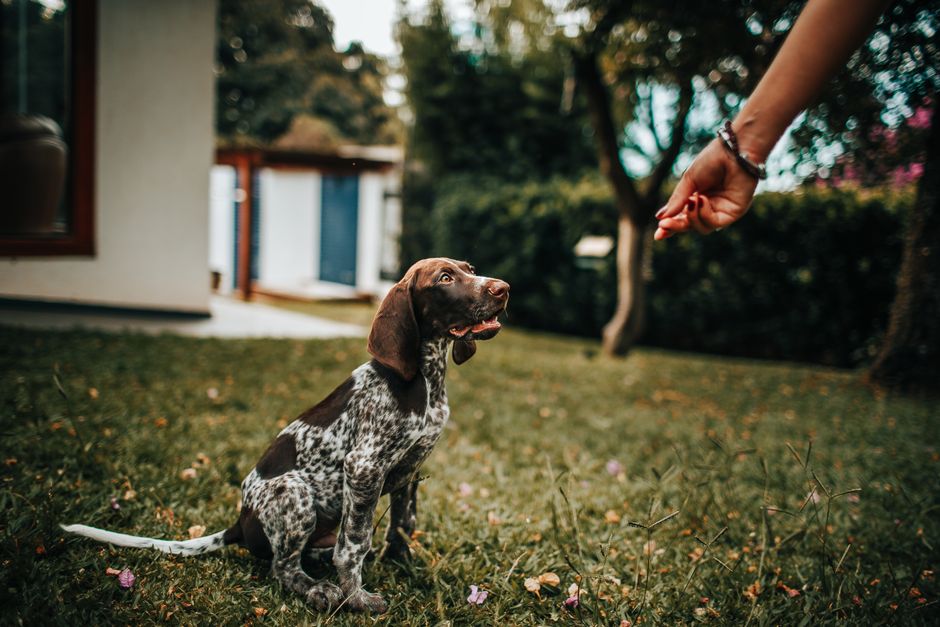
Teaching a dog to sit is often the first command introduced because it is relatively easy and sets the stage for other commands. To begin, hold a treat close to the dog’s nose and slowly move your hand upward. As the dog’s head follows the treat, its rear will naturally lower to the ground. Once the dog is in a sitting position, say “sit” clearly and immediately reward with the treat and praise. It is important to time the reward precisely so that the dog associates the word with the act of sitting.
Practice this command several times in short sessions, gradually phasing out the lure of the treat. For example, you might use a hand signal without a treat, or simply say the command and wait for the dog to sit. When the dog responds consistently, you can begin to practice sit in different locations and with varied distractions. This helps the dog generalize the command, understanding that sit means the same action regardless of the environment. Research in animal behavior suggests that dogs can learn to associate words with actions through repetition and association, and sit is a prime example.
One common mistake is pushing the dog’s rear down physically, which can be uncomfortable and less effective. Instead, allow the dog to offer the behavior naturally. If the dog does not sit, you can gently guide it by sliding your hand along its back, but avoid forcing. Positive reinforcement works best when the dog actively participates in the learning process. With patience, most dogs learn sit within a few days to a couple of weeks.
2. Stay
Stay is a crucial command for safety and control. It teaches a dog to remain in a specific position until released. To teach stay, start with the dog in a sit or down position. Give the command “stay” in a calm, firm voice, while holding your hand out in front of you, palm facing the dog. Take a single step back, then return to the dog and reward it for staying. Gradually increase the distance and duration of the stay, always rewarding the dog for holding the position.
It is essential to use a release word, such as “okay” or “free,” to signal that the dog can move. Consistency in the release word is vital to avoid confusion. Initially, the dog may break the stay, but it is important not to correct harshly. Instead, simply start over and reduce the difficulty if necessary. Break the training into small increments, gradually increasing the challenge as the dog succeeds. A useful technique is to use a visual marker, like placing a mat or a target, to help the dog understand where to stay.
Stay is a test of impulse control, so it is normal for dogs to struggle initially. Training in short sessions with frequent rewards helps build the dog’s confidence. Over time, the dog learns that staying put leads to positive outcomes. This command is particularly useful in daily situations, such as waiting at the door or during meals, contributing to a harmonious household.
3. Come
Recall, or come, is arguably the most vital command for a dog’s safety. A reliable recall can prevent accidents and ensure that the dog returns to the owner when called. To teach come, start indoors in a quiet area. Call the dog’s name and say “come” in an upbeat, enthusiastic tone. As the dog approaches, reward it with a treat and praise. Make coming to you always a positive experience, so the dog is eager to respond.
Practice come in various contexts, gradually increasing the distance and adding distractions. For example, you might call the dog from another room or while it is playing. It is essential to avoid calling the dog for unpleasant reasons, such as to end playtime or give a bath, as this can create a negative association. Instead, call the dog frequently throughout the day just to give it a treat and let it go again. This builds a strong recall.
One common pitfall is punishing the dog when it eventually comes after running away, which teaches the dog that coming is bad. Always reward the dog for coming, even if it took a while. Patience and consistency are key. Experts recommend using a long leash during initial training to safely practice recall in open spaces. Over time, the dog learns that coming when called leads to rewards, making the command reliable even in exciting environments.
4. Down
The down command is useful for calming a dog and establishing a relaxed state. It can also be a practical behavior in situations like eating at a restaurant or visiting friends. To teach down, start with the dog in a sit position. Hold a treat in your hand and let the dog sniff it. Then, lower your hand to the ground, guiding the dog into a lying position. As the dog lies down, say “down” and reward with the treat. It is important to ensure the reward is given while the dog is in the down position, not after it rises.
If the dog does not lie down, you can gently guide it by moving your hand forward along the floor, encouraging it to move into a prone position. Avoid leaning over the dog, which can be intimidating. Some dogs respond well to a hand signal, such as pointing to the ground. As with other commands, practice down in short sessions, gradually reducing the use of treats and relying more on the verbal cue.
Down is often more challenging for energetic dogs because it requires them to be calm and submissive. However, with positive reinforcement, it becomes a useful tool for promoting relaxation. It is also a good foundation for teaching other behaviors, such as rolling over or staying. Consistent practice helps the dog understand that down is a command to settle, which can be beneficial in managing hyperactivity.
5. Leave It
Leave it is a safety command that prevents a dog from picking up dangerous or undesirable items. To teach leave it, place a treat in your closed hand and let the dog sniff it. When the dog shows interest, say “leave it” and wait. When the dog stops sniffing or looks away, reward it with a different treat from your other hand. Repeat this, gradually opening your hand and eventually using items that the dog might find tempting, such as food on the floor or a toy.
The key is to reward the dog for ignoring the item, not for taking it. This teaches the dog that leaving something alone results in a reward. As the dog becomes proficient, you can practice leave it with items of increasing value or in more distracting environments. It is important to always maintain control and avoid letting the dog have the forbidden item, as this would undermine the training.
Leave it is particularly valuable for dogs that tend to scavenge or pick things up during walks. It can prevent the ingestion of harmful substances and reduce conflicts with other animals. Training this command requires patience, but the benefits are substantial. Over time, the dog learns to look to its owner for guidance when encountering something forbidden, reinforcing the owner-dog partnership.
Training Tips for Success
Effective training is built on a foundation of consistency, patience, and positive reinforcement. Setting clear expectations and using consistent verbal cues and hand signals helps the dog understand what is required. Training sessions should be short and frequent, avoiding long, tedious drills that can lead to frustration. It is also beneficial to end each session on a positive note, such as with a successful command and a reward, to keep the dog motivated.
Choosing the right rewards is crucial. While treats are common, some dogs are more motivated by play or praise. Experiment to find what works best for your dog and vary the rewards to maintain interest. Timing is also essential: the reward should be given immediately after the correct behavior to strengthen the association. With delayed rewards, the dog may not connect the action with the consequence.
Additionally, it is important to consider the dog’s individual needs. Puppies have shorter attention spans and may require more frequent, but shorter, sessions. Older dogs may learn more slowly but can still acquire new behaviors with patience. Dogs with behavioral issues might need specialized training or the guidance of a professional. In any case, training should always be a positive experience, free from punishment, to foster a trusting relationship.
Consistency among family members is also vital. If one person uses different commands or rewards, the dog may become confused. It is helpful to agree on a set of commands and training methods that everyone follows. As the dog masters the basics, you can gradually introduce more advanced commands, but the fundamental principles remain the same. Training is an ongoing process, and regular practice reinforces good behavior throughout the dog’s life.
Training sessions should be a time of connection and fun, not a chore. The goal is to build a strong, trusting partnership with your dog.
Conclusion
Teaching a dog basic commands is a rewarding endeavor that enhances safety, communication, and the relationship between dog and owner. The five commands discussed—sit, stay, come, down, and leave it—form a solid foundation for a well-mannered dog. By employing positive reinforcement, consistent practice, and patience, owners can effectively train their dogs while strengthening their bond. Remember that every dog learns at its own pace, and the process itself is an opportunity to understand and appreciate your canine companion.
While this guide provides a framework, it is important to acknowledge that each dog is unique, and results can vary based on numerous factors. Professional trainers may offer additional insights and personalized strategies for challenging cases. Ultimately, the goal is to create a harmonious living environment where both dog and owner thrive. With time and dedication, teaching these commands can be a fulfilling journey that benefits everyone involved.